Product Description
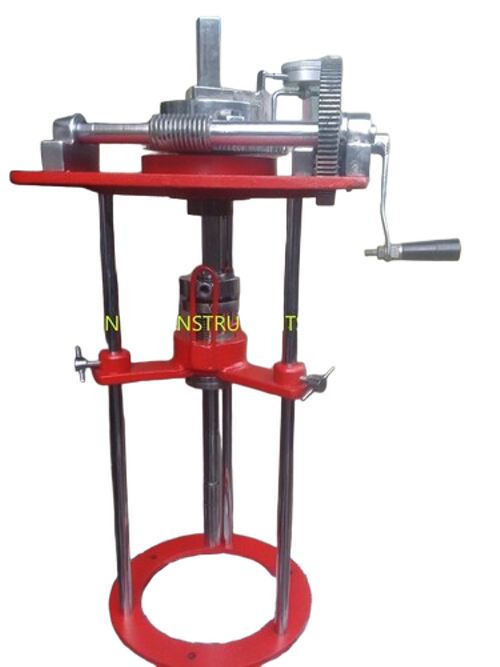
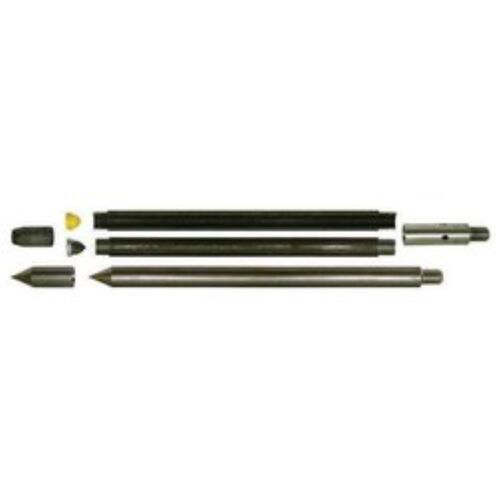
This apparatus is designed for conducting in-situ Vane hear test from the bottom of bore hole in saturated cohesive deposits, for determining their in-place shearing resistance. The equipment consists of a torque applicator assembly mounted on a base. A gear wheel, which is marked in degrees, holds a torque ring and is geared to a crank. The torque ring has a section cut from it and deforms as torque is applied and the resultant deformation is indicated by a dial gauge. A pointer is provided for registering the rotation of the vane. A detachable stand is provided to anchor the instrument. An attachment to securely hold the string of rods is provided. A calibration curve to convert the dial gauge readings to kg-cm of torque is also supplied.
Accurate and Versatile Field TestingDesigned for civil engineering applications, this apparatus measures shear strength of soil and rock with impressive accuracy (1%) and fine resolution (0.01 kN). Its adaptable control modes and variable test speeds ensure flexibility for diverse field requirements, while its rugged construction maintains stability under tough conditions.
User-Friendly and Portable DesignWith a weight of approximately 120 kg and fitted transport wheels, this apparatus is built for mobility across field sites. The inclusion of manual and automatic control, along with intuitive digital displays, makes setup and operation straightforward even in remote locations.
Safety and Environmental ProtectionOperator safety is reinforced with an overload protection system, while the IP54 rating ensures resistance to dust and water splashes. The apparatus performs reliably in environments up to 95% relative humidity and temperatures reaching 50C, making it suitable for varied working conditions.
FAQ's of in situ shear test apparatus:
Q: How is the In Situ Shear Test Apparatus typically used in field conditions?
A: The apparatus is deployed for shear strength testing of soil and rock blocks directly at the test site. Once mounted on the ground or foundation, a specimen is placed in the stainless steel shear box, and controlled displacement is applied via hydraulic or mechanical jack until shear failure, allowing direct measurement of shear and normal stresses.
Q: What are the benefits of the stainless steel shear box and IP54 environmental rating?
A: Stainless steel provides exceptional durability and corrosion resistance, essential for outdoor usage. The IP54 rating further ensures the apparatus is protected against dust ingress and splashing water, enabling consistent performance in harsh weather and environmental conditions.
Q: When should the hydraulic or mechanical jack be used for displacement?
A: The choice between hydraulic and mechanical jacks depends on application needs and site conditions. Hydraulic jacks are recommended for smoother and more controlled loading, particularly with higher forces, while mechanical jacks offer a straightforward and reliable manual alternative for moderate loads.
Q: Where can the results from the test apparatus be viewed and stored?
A: Test results are displayed on a digital load indicator integrated into the unit. Additionally, with the optional digital data logger and RS232/USB interface, data can be stored, transferred, and analyzed on external devices, facilitating efficient reporting and record-keeping.
Q: What is the process to ensure operator safety during testing?
A: The apparatus includes an overload protection system to prevent accidental overloading during testing operations. Operators are advised to follow the manufacturer's guidelines for setup, apply loads gradually, and monitor digital indicators to avoid exceeding the specified test range.
Q: How does the apparatus accommodate variations in specimen size and field conditions?
A: The standard block size is 300 mm x 300 mm x 200 mm, but the adjustable loading system, variable test speed, and extension rods allow for flexibility in specimen configuration and adaptation to various soil or rock types encountered in the field.
 We'are open : Mon - Sat 9:00 - 18:00





 Send Inquiry
 Send Inquiry